The Roman Empire began in 27 BCE, when Augustus became Rome’s first emperor, and the Western Roman Empire traditionally ended in 476 CE. During those five centuries, Rome grew into one of the most powerful empires in world history, ruled lands across Europe, North Africa, and the Middle East, and shaped law, government, language, religion, warfare, architecture, and trade.
This Roman Empire timeline explains the major turning points from the rise of Augustus to the fall of the western imperial line. It also briefly explains why the eastern half of the Roman Empire continued long after 476 CE, lasting until the fall of Constantinople in 1453.
Roman Empire Key Facts
| Topic | Key Fact |
|---|---|
| Start of the Roman Empire | 27 BCE |
| First Roman emperor | Augustus |
| Major territorial height | Around 117 CE under Trajan |
| Capital later founded in the East | Constantinople, dedicated in 330 CE |
| Traditional fall of the Western Roman Empire | 476 CE |
| End of the Eastern Roman Empire | 1453 CE |
Quick Roman Empire Timeline
| Date | Event | Why It Matters |
|---|---|---|
| 27 BCE | Augustus becomes Rome’s first emperor | Marks the beginning of imperial rule in Rome |
| 14 CE | Augustus dies | Tests whether the new imperial system can survive its founder |
| 43 CE | Claudius begins the Roman conquest of Britain | Shows continued expansion in the early empire |
| 64 CE | Great Fire of Rome | Becomes one of the most famous events of Nero’s reign |
| 69 CE | Year of the Four Emperors | Reveals the danger of unclear succession |
| 79 CE | Mount Vesuvius erupts | Destroys Pompeii and Herculaneum |
| 96–180 CE | Age of the so-called Five Good Emperors | Often remembered as a period of strong administration and relative stability |
| 117 CE | Rome reaches a major territorial height under Trajan | Shows the empire near the peak of its geographic expansion |
| 180 CE | Marcus Aurelius dies | Often used as a turning point toward greater instability |
| 235–284 CE | Crisis of the Third Century | Brings civil wars, invasions, inflation, and short-lived emperors |
| 284 CE | Diocletian becomes emperor | Begins major reforms of government and imperial rule |
| 293 CE | Tetrarchy established | Divides imperial authority among four rulers |
| 313 CE | Edict of Milan | Grants religious toleration to Christians and other groups |
| 330 CE | Constantinople is dedicated | Creates a powerful new eastern capital |
| 380 CE | Nicene Christianity becomes the official state religion | Marks a major religious transformation in the empire |
| 395 CE | Theodosius I dies | The empire is ruled from separate eastern and western courts afterward |
| 410 CE | Visigoths sack Rome | Deals a major symbolic blow to the Western Roman Empire |
| 476 CE | Romulus Augustulus is deposed | Traditional date for the fall of the Western Roman Empire |
| 1453 CE | Constantinople falls to the Ottomans | Marks the end of the Eastern Roman, or Byzantine, Empire |
Background: How Rome Became an Empire
Rome was not always ruled by emperors. According to Roman tradition, the city began as a monarchy and later became a republic in 509 BCE. During the Republic, Rome expanded across Italy and then across the Mediterranean world through warfare, alliances, colonization, and political control.
That expansion made Rome powerful, but it also created serious problems. Wealth from conquered lands increased inequality. Generals became more loyal to their armies than to the state. Political rivalries turned violent. By the 1st century BCE, Roman public life was shaped by civil wars and powerful leaders such as Marius, Sulla, Pompey, Julius Caesar, Mark Antony, and Octavian.
Julius Caesar’s dictatorship and assassination in 44 BCE did not restore the Republic. More civil war followed. Octavian, Caesar’s adopted heir, defeated Mark Antony and Cleopatra at the Battle of Actium in 31 BCE. In 27 BCE, the Senate gave Octavian the title Augustus. This is the usual starting point for the Roman Empire.
27 BCE–14 CE: Augustus and the Beginning of Imperial Rome
Augustus did not present himself as a king. Romans strongly disliked monarchy, so he kept many republican offices and traditions in place. In practice, however, Augustus controlled the army, the provinces, and the direction of the state. Rome still had a Senate, but the emperor now held the highest authority.
Augustus created the basic model for imperial rule. He reorganized the military, improved tax collection, strengthened provincial administration, and supported public building projects. His reign also helped begin the long period often called the Pax Romana, or Roman Peace, when much of the Mediterranean world experienced relative stability under Roman control.
This peace was not perfect. There were still frontier wars, revolts, and political tensions. But compared with the civil wars that ended the Republic, Augustus’s reign gave Rome a more durable system of government. When he died in 14 CE, the empire faced an important question: could imperial rule continue without its founder?
14–68 CE: The Julio-Claudian Emperors
The first imperial dynasty after Augustus is called the Julio-Claudian dynasty. It included Tiberius, Caligula, Claudius, and Nero. These rulers showed both the strengths and weaknesses of the new imperial system.
Tiberius kept the empire functioning after Augustus, but his reign also revealed the dangers of suspicion, court politics, and an emperor who withdrew from public life. Caligula’s short rule became associated with cruelty, extravagance, and instability. Claudius, who came to power after Caligula’s assassination, proved more capable than many expected. Under Claudius, Rome began the conquest of Britain in 43 CE.
Nero was the last Julio-Claudian emperor. His reign is remembered for the Great Fire of Rome in 64 CE, ambitious building projects, conflict with elites, and accusations of tyranny. When Nero lost military and political support, he died by suicide in 68 CE. His death ended the dynasty and left the empire without a clear successor.
69–96 CE: Civil War and the Flavian Dynasty
The year 69 CE is known as the Year of the Four Emperors because Galba, Otho, Vitellius, and Vespasian all claimed imperial power in quick succession. This crisis exposed one of Rome’s greatest political weaknesses: when succession was unclear, armies could make and unmake emperors.
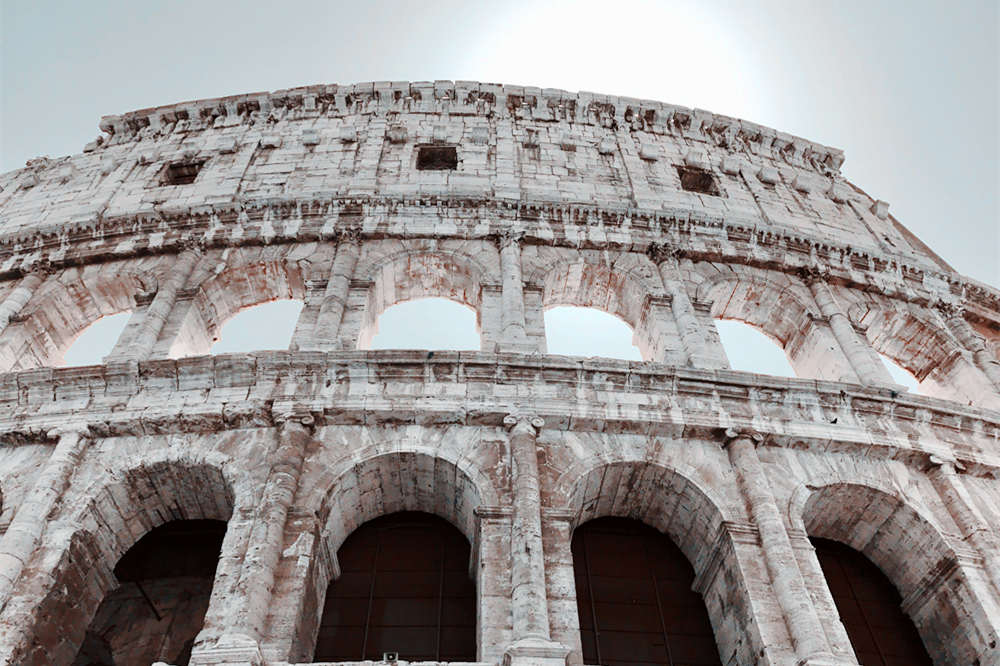
Vespasian eventually won the struggle and founded the Flavian dynasty. His rule restored order after civil war. He also began construction of the Colosseum, a public monument that connected the new dynasty with entertainment, imperial generosity, and the city of Rome itself.
Vespasian’s son Titus ruled briefly but faced major disasters, including the eruption of Mount Vesuvius in 79 CE. The eruption buried Pompeii and Herculaneum, preserving buildings, streets, wall paintings, and everyday objects that later gave historians and archaeologists a remarkable view of Roman life. Readers can explore the site further through the official Pompeii Archaeological Park.
Domitian, the last Flavian emperor, strengthened administration and frontier defenses, but his rule became increasingly unpopular with the Senate. His assassination in 96 CE ended the dynasty and opened the way for a new phase of imperial rule.
96–180 CE: The Empire at Its Height
The period from Nerva to Marcus Aurelius is often remembered as one of the Roman Empire’s strongest eras. The emperors usually included in this group are Nerva, Trajan, Hadrian, Antoninus Pius, and Marcus Aurelius. Later writers sometimes called them the “Five Good Emperors,” although the label simplifies a more complex history.
Trajan brought the empire to one of its greatest territorial extents around 117 CE. Rome controlled lands from Britain to Egypt and from Spain to parts of Mesopotamia. The empire included many peoples, languages, religions, and local traditions, all connected by Roman roads, military garrisons, cities, trade routes, and law.
Hadrian, Trajan’s successor, focused less on expansion and more on consolidation. He strengthened frontiers and is closely associated with Hadrian’s Wall in Britain. Under Antoninus Pius, the empire experienced relative internal calm. The Metropolitan Museum of Art describes the Roman imperial period as one marked by secure borders, stable government, prosperity, artistic achievement, and flourishing trade.
Marcus Aurelius, the philosopher-emperor, spent much of his reign dealing with war and pressure along the frontiers. His death in 180 CE is often used as a convenient turning point. Rome did not collapse at that moment, but the decades that followed brought more visible political, military, and financial strain.
180–235 CE: From Commodus to the Severan Dynasty
Commodus, the son of Marcus Aurelius, became sole emperor in 180 CE. His reign damaged relations between the emperor, the Senate, and the military elite. After his assassination in 192 CE, Rome again entered a succession crisis, with several claimants competing for power.
Septimius Severus eventually secured the throne and founded the Severan dynasty. He was a strong military ruler who increased the army’s role in imperial politics. His dynasty included Caracalla, who is best known for extending Roman citizenship to free inhabitants of the empire in 212 CE.
By the early 3rd century, Rome was still powerful, but the imperial system had become more fragile. Emperors depended heavily on soldiers, provincial armies, and court factions. Frontier defense grew more expensive. Succession remained uncertain. These pressures helped prepare the way for a much deeper crisis.
235–284 CE: The Crisis of the Third Century
The Crisis of the Third Century was one of the most dangerous periods in Roman imperial history. It began after the assassination of Severus Alexander in 235 CE and continued until Diocletian took power in 284 CE. During these decades, emperors rose and fell quickly, often through military revolt or assassination.
The crisis had several causes. Germanic groups pressed on the northern frontiers. The Sasanian Empire challenged Rome in the east. Civil wars drained money and manpower. Inflation weakened the economy. The empire also temporarily split into competing regions, including the Gallic Empire in the west and the Palmyrene Empire in the east.
Rome survived, but only after great strain. Emperor Aurelian helped reunify the empire in the 270s and became known as “Restorer of the World.” Even so, the old system could not simply return to normal. The crisis showed that the empire needed stronger administration, better military organization, and more flexible centers of power.
284–305 CE: Diocletian and the Tetrarchy
Diocletian became emperor in 284 CE and began a major reorganization of the Roman state. His reforms were designed to make the empire easier to govern and defend. Instead of relying on one ruler to control the entire empire, Diocletian divided authority among multiple rulers.
In 293 CE, he established the Tetrarchy, which means “rule by four.” Two senior emperors, called Augusti, ruled with two junior emperors, called Caesars. The goal was to improve defense, reduce succession struggles, and make government more responsive across a huge empire.
The Tetrarchy did not last permanently. After Diocletian retired, rivalries returned. Still, his reforms changed the empire deeply. They marked the beginning of what historians often call the late Roman Empire, a more centralized and heavily administered state than the empire Augustus had created.
306–337 CE: Constantine and a Changing Empire
Constantine rose to power after the breakdown of the Tetrarchy. His victory at the Battle of the Milvian Bridge in 312 CE became one of the most famous moments in Roman and Christian history. The next year, Constantine and Licinius issued the Edict of Milan, which granted religious toleration and restored property to Christians who had suffered persecution.
The Edict of Milan did not make Christianity the official religion of the Roman Empire. Instead, it made Christianity legally tolerated and helped move it from a persecuted faith to a religion with imperial support. This distinction matters because the empire’s official religious identity changed more fully later, under Theodosius I.
Constantine also changed the geography of imperial power. In 330 CE, he dedicated Constantinople on the site of the older city of Byzantium. The new capital stood in a strong strategic position between Europe and Asia, close to major trade and military routes. Over time, Constantinople became the center of the Eastern Roman Empire.
337–395 CE: Religious Change and Final Imperial Division
After Constantine’s death in 337 CE, the empire continued to face civil wars, frontier threats, and religious disputes. Christianity gained influence, but Christians themselves disagreed over doctrine. Emperors increasingly became involved in religious debates because religious unity was often seen as connected to political unity.
Theodosius I became emperor in the East in 379 CE and later ruled both eastern and western halves of the empire. In 380 CE, Nicene Christianity became the official state religion of the Roman Empire. This went beyond the Edict of Milan. The earlier policy had granted toleration; the later policy gave official imperial support to a specific form of Christianity.
When Theodosius died in 395 CE, the empire was divided between his sons. The eastern and western halves still belonged to the Roman imperial tradition, but they were now ruled from separate courts. The East was wealthier, more urbanized, and better positioned to survive. The West faced heavier military pressure, weaker finances, and repeated political instability.
395–476 CE: The Fall of the Western Roman Empire
The Western Roman Empire did not fall in a single day. Its decline was a long process shaped by military pressure, political instability, economic weakness, and the growing power of non-Roman military leaders inside imperial territory.
In 410 CE, the Visigoths under Alaric sacked Rome. The city was no longer the practical center of imperial government, but it remained a powerful symbol. The sack shocked the Roman world because Rome had not suffered such an event for centuries.
In the decades that followed, the western government lost more territory and revenue. The Vandals took control of North Africa, one of the West’s most important sources of grain and wealth. The Huns, led by Attila, added further pressure in the mid-5th century. Western emperors became weaker, while generals and military strongmen often held real power.
In 476 CE, the Germanic leader Odoacer deposed Romulus Augustulus, the young western emperor. This event is traditionally used as the fall of the Western Roman Empire. Still, the date is more complicated than it may look. Romulus Augustulus was a puppet ruler and was not recognized as legitimate by the Eastern Roman emperor. His removal ended the western imperial office, but Roman law, culture, cities, language, and institutions did not disappear overnight.
What Happened to the Eastern Roman Empire?
The eastern half of the Roman Empire survived the western collapse. Its capital was Constantinople, and its rulers continued to see themselves as Roman emperors. Modern historians often call this state the Byzantine Empire, but that term came later.
The Eastern Roman Empire remained powerful for centuries. Under Justinian I in the 6th century, eastern armies reconquered parts of the former western empire, including North Africa and Italy. Justinian’s reign also produced an important collection of Roman law that influenced later legal traditions.
The eastern empire changed over time, especially in language, territory, and culture, but it preserved the Roman imperial tradition long after the West had fragmented into new kingdoms. It finally ended in 1453, when the Ottoman Turks captured Constantinople.