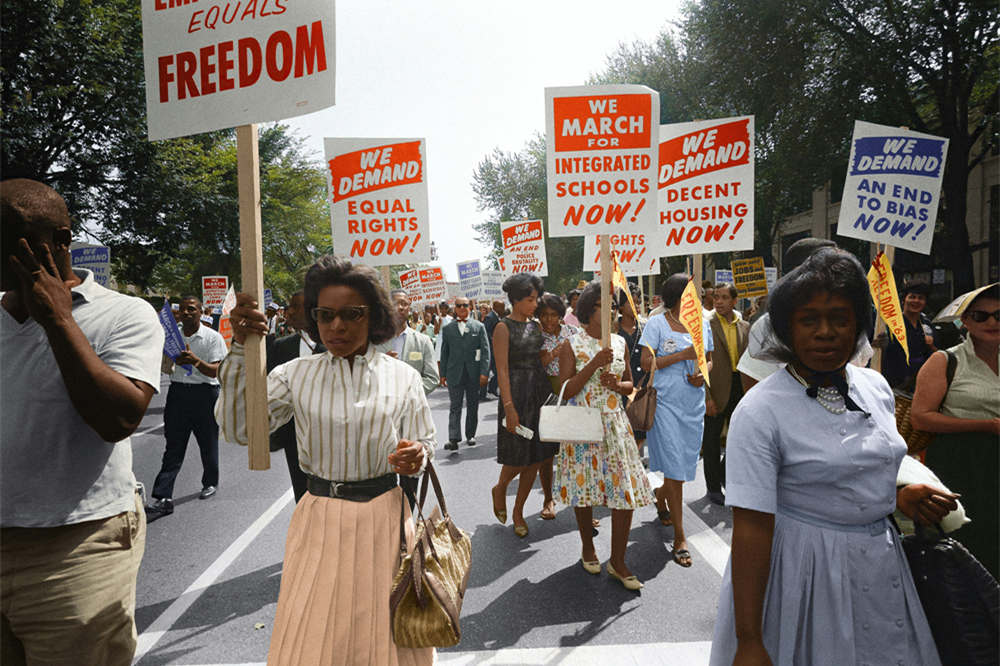
Black history quotes are more than memorable lines. They carry the voices of people who fought slavery, challenged segregation, built schools, wrote books, led movements, created art, and asked the United States to live up to its stated ideals.
Some famous quotes have been shortened, modernized, or repeated in slightly different forms over time. That is why it helps to study the words along with the people and events behind them. A quote becomes more meaningful when readers understand who said it, what problem they were facing, and why the words still matter.
Why Black History Quotes Matter
Black History Month grew from the work of historian Carter G. Woodson, who helped establish Negro History Week in 1926 to encourage the study of Black life, history, and culture. Over time, that week expanded into the month-long observance now recognized each February.
But Black history is not only for February. These quotes can support lessons about slavery, emancipation, Reconstruction, Jim Crow, civil rights, voting rights, education, literature, music, law, and modern social change. They are useful for students, teachers, parents, and anyone who wants to understand history through the words of people who helped shape it.
Black History Quotes About Freedom
Freedom is one of the central themes of Black history. For enslaved people, freedom meant control over one’s own body, family, movement, labor, and future. For abolitionists, it meant the end of slavery. For later generations, it also meant voting rights, equal schools, fair laws, safe communities, and the right to live with dignity.
1. “If there is no struggle, there is no progress.” – Frederick Douglass
Frederick Douglass said these words in his 1857 “West India Emancipation” speech, delivered on the anniversary of emancipation in the British West Indies. Douglass had escaped slavery and became one of the most important abolitionist writers and speakers in American history. His point was clear: people in power rarely give up injustice without pressure. Progress usually requires courage, organization, and persistence.
2. “Power concedes nothing without a demand.” – Frederick Douglass
This line also comes from Douglass’s “West India Emancipation” speech. It helps explain why Black history includes petitions, speeches, escapes, boycotts, lawsuits, marches, and community organizing. Douglass believed that freedom had to be demanded, defended, and expanded.
3. “I never ran my train off the track and I never lost a passenger.” – Harriet Tubman
Harriet Tubman used the language of a railroad conductor to describe her work on the Underground Railroad. According to the National Park Service, Tubman spoke proudly of her work guiding enslaved people toward freedom. She escaped slavery, then returned many times to help others reach freedom. Her words show both bravery and responsibility.
4. “Ain’t I a Woman?” – Sojourner Truth
This famous phrase is connected to Sojourner Truth’s 1851 speech at a women’s rights convention in Akron, Ohio. The wording of that speech exists in different versions, and the Sojourner Truth Project compares the different published versions. Historians often note that the later, more famous version may not preserve Truth’s exact dialect or phrasing. Still, the message is historically important. Truth challenged both racism and sexism, insisting that Black women belonged in conversations about rights, labor, freedom, and humanity.
Black History Quotes About Courage
Courage in Black history took many forms. Sometimes it meant public protest. Sometimes it meant writing the truth when it was dangerous. Sometimes it meant refusing to move, refusing to be silent, or refusing to accept unfair treatment as normal.
5. “You must never be fearful about what you are doing when it is right.” – Rosa Parks
This quote is widely associated with Rosa Parks, whose refusal to give up her bus seat in Montgomery, Alabama, became a major moment in the civil rights movement. The Library of Congress documents Parks’s life and activism in its exhibition “Rosa Parks: In Her Own Words.” Parks was not simply a tired passenger. She had a long record of civil rights work before the Montgomery Bus Boycott.
6. “The way to right wrongs is to turn the light of truth upon them.” – Ida B. Wells
Ida B. Wells lived this idea through her work as a journalist and anti-lynching activist. The New York Public Library connects this quote to Wells’s legacy of exposing racial violence and demanding accountability. At a time when telling the truth could bring serious danger, Wells investigated, wrote, and organized. Her quote is a reminder that truth-telling can be a form of resistance.
7. “Good trouble, necessary trouble.” – John Lewis
John Lewis used this phrase to describe moral action against injustice. The Smithsonian’s National Museum of American History explains how “good trouble” connected to Lewis’s long career in civil rights and public service. As an activist, Lewis joined sit-ins, Freedom Rides, and voting rights marches. Later, as a member of Congress, he continued to speak about democracy, equality, and public responsibility.
8. “I’m sick and tired of being sick and tired.” – Fannie Lou Hamer
Fannie Lou Hamer spoke these words during the struggle for voting rights and political representation. A transcript from the Carrie Chapman Catt Center for Women and Politics places the quote in a 1964 speech. Hamer, a Mississippi activist, faced threats and violence because she tried to register to vote and help others do the same. Her quote expresses both exhaustion and determination.
Black History Quotes About Education and Knowledge
Education has always been central to Black history. During slavery, many enslaved people were denied literacy because reading and writing were connected to power. After emancipation, Black communities built schools, founded colleges, trained teachers, published newspapers, and preserved history for future generations.
9. “Real education means to inspire people to live more abundantly.” – Carter G. Woodson
Carter G. Woodson developed this idea in The Mis-Education of the Negro. The National Park Service highlights Woodson’s words and work through the Carter G. Woodson Home National Historic Site. Woodson believed education should do more than deliver facts. It should help people understand their lives, improve their communities, and think for themselves.
10. “The problem of the twentieth century is the problem of the color-line.” – W. E. B. Du Bois
W. E. B. Du Bois wrote this famous line in The Souls of Black Folk. By “color-line,” he meant the racial divisions shaping law, education, labor, politics, and global power. The quote matters because Du Bois was not only describing personal prejudice. He was analyzing racism as a system that shaped society.
11. “Invest in the human soul. Who knows, it may be a diamond in the rough.” – Mary McLeod Bethune
Mary McLeod Bethune devoted her life to education, especially for Black children and young adults. The Smithsonian National Portrait Gallery describes Bethune’s work as an educator and public leader. She founded a school that later became Bethune-Cookman University and became a major national advocate for opportunity. Her quote presents education as an act of faith: when society invests in people, hidden talent can grow.
12. “Cast down your bucket where you are.” – Booker T. Washington
Booker T. Washington used this phrase in his 1895 Atlanta Exposition Address. He emphasized work, training, and economic development for Black communities in the South. His approach was debated by other Black leaders, including Du Bois, who believed Washington accepted too many limits on civil rights. This quote is useful because it shows that Black leaders did not always agree on strategy.
Black History Quotes About Justice and Equality
Justice and equality are not abstract ideas in Black history. They connect to court cases, voting rights, school desegregation, housing, employment, protest, and public safety. Quotes about justice help readers understand how Black leaders challenged the gap between American promises and American reality.
13. “Injustice anywhere is a threat to justice everywhere.” – Martin Luther King Jr.
Martin Luther King Jr. wrote this line in his 1963 “Letter from Birmingham Jail”. King was answering critics who thought civil rights activists should wait or move more slowly. His point was that injustice is never isolated. When one community’s rights are denied, the whole society is affected.
14. “Not everything that is faced can be changed, but nothing can be changed until it is faced.” – James Baldwin
James Baldwin wrote with sharp honesty about race, identity, religion, family, and American contradictions. Quote Investigator traces this wording and discusses its attribution to Baldwin. The quote is useful for history study because it connects truth and change. A society cannot repair what it refuses to examine.
15. “If they don’t give you a seat at the table, bring a folding chair.” – Shirley Chisholm
This quote is commonly associated with Shirley Chisholm, the first Black woman elected to the United States Congress. The Smithsonian’s Searchable Museum introduces Chisholm’s life and political impact. Chisholm challenged barriers in politics and later became the first Black woman to seek a major party’s presidential nomination. The quote turns representation into action.
16. “In recognizing the humanity of our fellow beings, we pay ourselves the highest tribute.” – Thurgood Marshall
Thurgood Marshall, the first Black Supreme Court justice, spent much of his career fighting legal segregation and racial injustice. The United States Courts profile explains Marshall’s role in Brown v. Board of Education, the landmark school desegregation case. His quote reminds readers that justice begins with recognizing the full humanity of others.
Black History Quotes About Strength and Resilience
Black history includes pain, but it should never be reduced only to suffering. It also includes endurance, family, faith, music, literature, science, sports, business, humor, and community building. Quotes about resilience show how people continued to create meaning even under pressure.
17. “Still, like dust, I’ll rise.” – Maya Angelou
Maya Angelou wrote this line in her poem “Still I Rise”. The poem has become one of the best-known expressions of resilience in modern American literature. The line turns insult and hardship into movement. It can open a discussion about how poetry preserves emotional truth as well as historical memory.
18. “There is no greater agony than bearing an untold story inside you.” – Maya Angelou
Angelou’s words come from I Know Why the Caged Bird Sings. They remind readers that storytelling can be a form of survival. Black history often involves recovering stories that were ignored, erased, distorted, or pushed to the margins. When people tell their own stories, they challenge the idea that someone else has the right to define them.
19. “Definitions belong to the definers, not the defined.” – Toni Morrison
Toni Morrison wrote this line in Beloved. Her words speak to the power of language. Who gets to define beauty, intelligence, citizenship, family, history, or humanity? Much of Black history involves rejecting false definitions created by racism and replacing them with self-knowledge, community memory, and cultural pride.
Resilience does not mean injustice was acceptable or easy to endure. It means people found ways to live, create, organize, love, and imagine a future even when systems worked against them.
Black History Quotes About Identity and Pride
Identity and pride became especially visible during movements such as the Harlem Renaissance, the civil rights era, the Black Arts Movement, and later cultural movements. These quotes remind readers that Black history is not only about what people resisted. It is also about what they created, protected, and celebrated.
20. “Up, you mighty race.” – Marcus Garvey
Marcus Garvey’s words reflected a message of racial pride and global Black identity. Garvey’s ideas were controversial and widely debated, but his influence was significant. He encouraged people of African descent to think beyond local discrimination and see themselves as part of a larger global story.
21. “To be young, gifted and Black.” – Lorraine Hansberry
This phrase is closely connected to Lorraine Hansberry and later became widely known through Nina Simone’s song “To Be Young, Gifted and Black.” The phrase matters because it speaks directly to young people. It insists on talent, beauty, intelligence, and promise.
22. “I am not tragically colored.” – Zora Neale Hurston
Zora Neale Hurston wrote this line in “How It Feels to Be Colored Me”. Hurston’s words are direct and confident. They reject the idea that Black identity should be understood only through pain. Her writing celebrates personality, culture, voice, and self-definition.
Final Thoughts
Black history quotes remain powerful because they carry memory. They help readers hear how people described freedom, courage, education, justice, pride, and hope in their own words. A strong quote can fit on a poster, but its meaning is much larger than the words alone.
When readers study the lives behind the quotes, they gain more than inspiration. They gain a clearer understanding of the past and a stronger sense of responsibility in the present.