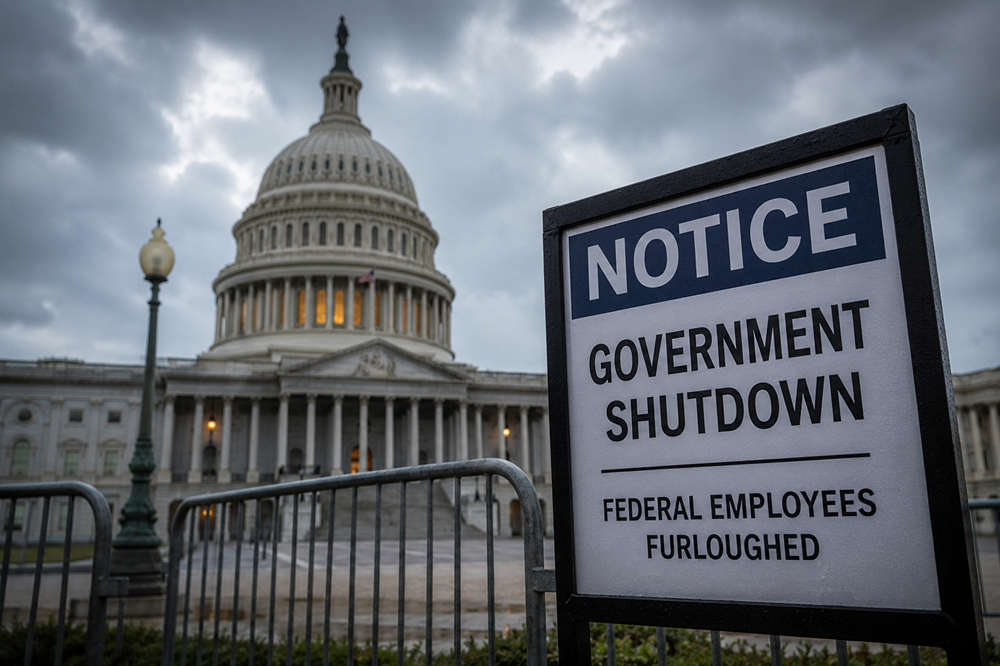
A government shutdown happens when parts of the federal government lose legal authority to spend money because Congress and the president have not approved funding in time. In everyday terms, some federal services pause, some workers are furloughed, and others may have to keep working without immediate pay.
In this article, “funding gap” means the period after an appropriation expires but before new funding is approved. “Government shutdown” usually refers to a funding gap that forces affected agencies to stop work that is not legally allowed to continue. The modern shutdown system developed over time, especially after stricter legal interpretations of the Antideficiency Act in the early 1980s.
Quick Answer: Government Shutdown Timeline at a Glance
| Period | Shutdown or Funding Gap | Main Issue | Length | Historical Importance |
|---|---|---|---|---|
| 1970s | Early funding gaps | Missed appropriations deadlines | Varied | Showed that budget deadlines could be missed before modern shutdown rules were fully established. |
| 1980–1981 | Legal turning point | Antideficiency Act interpretation | Not one single shutdown | Created the foundation for modern shutdown procedures. |
| 1980s | Short shutdowns | Budget delays and policy disputes | Often 1–3 days | Made shutdown planning and furlough procedures more common. |
| 1995–1996 | Clinton-Gingrich shutdowns | Spending, Medicare, education, and the size of government | Longest stretch lasted 21 days | Became a defining example of modern shutdown politics. |
| 2013 | Affordable Care Act shutdown | Dispute over health care law funding | 16 days | Showed how a major policy fight could become tied to government funding. |
| 2018 | Short funding lapses | Budget and immigration-related disputes | Brief | Showed continued reliance on short-term funding deadlines. |
| 2018–2019 | Border wall shutdown | Funding for a U.S.-Mexico border wall | 35 calendar days | For several years, it was the longest shutdown in U.S. history. |
| Oct.–Nov. 2025 | FY2026 full shutdown | Unfinished appropriations at the start of the fiscal year | 42 full days, often described as 43 calendar days | Became the longest shutdown by full-day count in the modern shutdown era. |
| Jan.–Feb. 2026 | FY2026 partial shutdown | Unfinished appropriations after temporary funding expired | 3 full days | Showed that the November 2025 reopening did not resolve every funding issue. |
| Feb.–Apr. 2026 | FY2026 partial shutdown | Remaining appropriations dispute, especially affecting Homeland Security-related funding | 76 full days | Became another major FY2026 funding lapse and showed the risks of repeated temporary funding deadlines. |
How the Federal Budget Process Creates Shutdown Risk
To understand a government shutdown, it helps to start with the federal budget calendar. The federal fiscal year begins on October 1. Before that date, Congress is supposed to pass appropriations bills that fund many federal departments, agencies, and programs. The president must then sign those bills, or Congress must override a veto, for the funding to become law.
If lawmakers do not finish all regular appropriations bills by October 1, they often pass a temporary measure called a continuing resolution. A continuing resolution, or CR, keeps the government running for a limited time, usually at current or near-current funding levels. The federal appropriations process depends on Congress and the president reaching agreement before funding expires.
A shutdown risk appears when neither regular appropriations nor a continuing resolution is in place. At that point, agencies funded by the expired appropriations face a lapse in funding. Under the rules governing lapses in appropriations, agencies generally cannot keep spending money unless the activity falls under a legal exception.
Before Modern Shutdowns: Funding Gaps in the 1970s
Funding gaps existed before the shutdown system Americans know today. In the 1970s, Congress sometimes missed appropriations deadlines, leaving agencies without fresh funding in place. Even then, the result was not always an immediate shutdown of normal operations.
Many agencies continued working while expecting Congress to approve funding soon. The practical assumption was that a missed deadline would be fixed quickly. That earlier pattern helps explain why the modern shutdown timeline is not just about budget delays. It is also about how federal law came to be interpreted.
1980–1981: The Legal Turning Point
The modern government shutdown system grew out of stricter interpretations of the Antideficiency Act. This law limits the federal government from spending money that Congress has not provided. It is closely tied to Congress’s constitutional power over federal spending.
In 1980 and 1981, Attorney General Benjamin Civiletti issued opinions that changed how agencies responded to funding gaps. The House History overview of federal shutdowns explains that agencies had often continued operating before this period, but the Civiletti opinions helped establish the stricter modern approach.
After that shift, agencies could not simply assume that regular operations could continue without appropriations. They had to decide which activities were legally allowed to continue and which had to stop. Beginning in the early 1980s, funding gaps increasingly triggered formal shutdown procedures, including agency closures, furloughs, and excepted work assignments.
1980s Shutdowns: Short but Frequent Disruptions
The 1980s brought several short shutdowns and funding gaps. Many lasted only one or a few days. They often happened because Congress and the White House missed a deadline, disagreed over spending levels, or attached policy disputes to funding bills.
These early shutdowns were not usually as long as later ones, but they were important because they made shutdown planning a recurring part of federal budgeting. Agencies became more familiar with furlough notices. Federal workers became more aware that missed budget deadlines could affect their pay and schedules. Lawmakers also learned that funding deadlines could create political pressure.
Most of these shutdowns ended quickly. Still, the pattern was clear: when government funding depended on last-minute negotiations, shutdown risk became part of the normal budget cycle.
1990 and the Growth of Budget Standoffs
By 1990, federal budget fights were becoming more intense. Deficit concerns, taxes, entitlement spending, and domestic program limits shaped negotiations. The shutdown that year was short, but it pointed toward a period when budget deadlines could become larger political battles.
The 1990s also included divided government, with one party controlling the White House and another controlling Congress for part of the decade. Divided government does not automatically cause shutdowns, but it can make funding talks harder when the branches disagree over national priorities.
1995–1996: The Clinton-Gingrich Shutdowns
The 1995–1996 shutdowns were among the most important in U.S. history because they turned shutdown politics into a major national story. The conflict took place between President Bill Clinton and the Republican-controlled Congress led by House Speaker Newt Gingrich.
The fight involved broad questions about the size and role of the federal government. Lawmakers argued over spending levels, Medicare, education, environmental programs, taxes, and the path toward balancing the budget. These were not small disagreements over timing. They were connected to competing views of what the federal government should do.
The longest shutdown in this period lasted 21 days, from December 1995 into January 1996. Federal workers were furloughed, services were disrupted, and the shutdown became a national symbol of political confrontation. It also showed that shutdowns could last long enough to shape public opinion.
For students of U.S. history, the 1995–1996 shutdowns are important because they show how budget deadlines can become battles over ideology. The question was not only whether the government would be funded, but what kind of government would be funded.
2013: The Affordable Care Act Shutdown
The next major shutdown came in October 2013. It lasted 16 days and centered on a dispute over the Affordable Care Act, often called Obamacare. Some lawmakers sought to delay, defund, or weaken the law as part of the government funding debate. Others argued that keeping the government open should not depend on changing a major health care law that had already been enacted.
The shutdown affected national parks, museums, federal offices, research activities, and many public services. Images of closed parks and furloughed workers made the shutdown visible to people who did not closely follow the budget process.
The 2013 shutdown also showed how one major policy issue could become tied to the broader funding process. Instead of passing a clean funding bill or temporary continuing resolution, lawmakers remained deadlocked over health care policy.
2018: Short Shutdowns and Budget Tension
In 2018, the federal government experienced brief shutdowns before the much longer shutdown that began later that year. One short shutdown occurred in January during a dispute that included immigration policy and federal spending. Another brief lapse happened in February.
These interruptions mattered because they showed that Congress was still relying heavily on temporary funding measures. Continuing resolutions can prevent immediate shutdowns, but they also push major decisions into the future. When temporary funding expires again, the same disagreements can return.
2018–2019: The Long Border Wall Shutdown
The shutdown that began in late December 2018 and ended in January 2019 became one of the best-known government shutdowns in U.S. history. It centered on a dispute over funding for a wall along the U.S.-Mexico border. President Donald Trump sought border wall funding, while congressional Democrats opposed providing the amount requested.
This was a partial shutdown because some parts of the government had already been funded through separate appropriations. Other departments and agencies, however, were affected. Workers at agencies such as the Department of Homeland Security, the Department of Justice, the Department of Agriculture, and others faced furloughs or delayed pay depending on their roles.
The shutdown lasted 35 calendar days, making it the longest shutdown in U.S. history at the time. Airports, food inspections, immigration courts, national parks, and many other services felt pressure. Some federal employees had to work without immediate pay until the shutdown ended. Contractors and local businesses near federal workplaces also faced financial strain.
The economic effects were measurable. The Congressional Budget Office estimated that the partial shutdown delayed federal spending and reduced economic output, with some losses not expected to be recovered even after the government reopened. The CBO analysis of the 2018–2019 partial shutdown showed that shutdowns can affect more than government offices; they can also ripple through the wider economy.
2025–2026: Recent Shutdowns and Funding Lapses
The FY2026 shutdown period showed that shutdown politics did not end after 2019. A major funding gap began on October 1, 2025, after Congress and the White House failed to approve funding before the new fiscal year began.
Congressional Research Service reporting describes the October–November FY2026 shutdown as lasting 42 full days. Many public summaries describe the same shutdown as 43 calendar days because it ran from October 1 to November 12, 2025. The difference comes from how sources count shutdown duration: some count full days without funding, while others count calendar dates from start to finish.
This shutdown surpassed the 2018–2019 shutdown by full-day count and became the longest shutdown of the modern shutdown era. It ended with a funding package that reopened the government, provided full-year appropriations for some areas, and temporarily funded others.
However, the November 2025 reopening did not settle every FY2026 funding issue. A partial shutdown occurred from January 31 to February 3, 2026, after temporary funding expired. Another partial shutdown ran from February 14 to April 30, 2026, lasting 76 full days and affecting remaining unfunded areas, especially Homeland Security-related appropriations.
The FY2026 appropriations process showed how repeated continuing resolutions can create repeated shutdown risks. When lawmakers solve one deadline with temporary funding, they may also create another deadline a few weeks or months later.
What Happens During a Government Shutdown?
A government shutdown does not mean every part of the federal government stops. Some work continues because it is legally excepted, funded separately, or necessary to protect life and property. Other work pauses until Congress and the president restore funding.
Federal Workers
Federal employees are often divided into different groups during a shutdown. Some are furloughed and told not to work. Others are excepted and must continue working, often without immediate pay. Employees whose work is paid through funding sources not affected by the lapse may continue under normal rules.
The Office of Personnel Management’s shutdown furlough guidance explains that a shutdown furlough occurs when there is a lapse in appropriations and an affected agency must stop activities funded by annual appropriations that are not excepted by law.
This is why shutdowns can be confusing. Two workers in the same broad agency may have different statuses depending on their job, funding source, and legal role. Federal employees have often received retroactive pay after shutdowns end, but the timing and details can still become part of the shutdown debate.
Public Services
Public services can be delayed, reduced, or paused during a shutdown. National parks and museums may close or operate with limited staff. Passport processing, permits, loans, inspections, research grants, and customer service lines may slow down. Federal websites may stop updating. Government data releases can also be delayed, affecting researchers, businesses, journalists, and policymakers.
The exact impact depends on which agencies are unfunded and how long the shutdown lasts. A short lapse over a weekend may cause little visible disruption. A long shutdown can affect travel, food assistance administration, courts, scientific research, small-business services, housing programs, and many other areas.
Programs That May Continue
Some federal programs may continue during a shutdown because they are funded differently or because they fall under legal exceptions. Social Security payments generally continue during shutdowns, and the Social Security Administration told the public during the 2026 shutdown that payments would not be impacted. Medicare benefits also usually continue; the Department of Health and Human Services stated that the Medicare program would continue during a lapse in appropriations.
Even when benefit payments continue, related services can still be affected. New applications, replacement cards, in-person support, phone assistance, administrative processing, or response times may change depending on staffing and agency plans.
Contractors and Local Economies
Federal contractors can be especially vulnerable during shutdowns. Federal employees may receive back pay after funding resumes, but contractors do not always receive the same protection. Cleaning staff, food service workers, security personnel, technology workers, and other contractors may lose income when federal buildings close or projects pause.
Local economies can also feel the effects. Communities near federal offices, military installations, national parks, and research centers may depend on federal workers and visitors. When paychecks are delayed or services close, nearby restaurants, shops, hotels, and transportation businesses may lose revenue.
Key Terms to Know
Appropriations
Appropriations are laws that provide money for federal agencies and programs. Many agencies need annual appropriations to operate.
Continuing Resolution
A continuing resolution is a temporary funding law that keeps the government running when regular appropriations bills are not finished.
Fiscal Year
The federal fiscal year begins on October 1 and ends on September 30 of the next calendar year.
Funding Gap
A funding gap happens when an appropriation expires before a new appropriation or continuing resolution is enacted.
Government Shutdown
A government shutdown happens when a funding gap forces affected agencies to stop non-excepted operations.
Antideficiency Act
The Antideficiency Act is a federal law that generally prevents agencies from spending or obligating money beyond what Congress has provided.
Furlough
A furlough is a temporary unpaid status for employees who are told not to work during a shutdown.
Excepted Employee
An excepted employee is required to continue working during a shutdown because the work is legally allowed to continue.
Mandatory Spending
Mandatory spending is funding controlled by laws other than annual appropriations. Some benefit programs fall into this category.
Discretionary Spending
Discretionary spending is funding that Congress usually approves through annual appropriations bills.
Government Shutdown Timeline Summary
The U.S. government shutdown timeline shows how a budget deadline can become a major national event. Funding gaps existed in the 1970s, but they did not always stop government operations. The stricter Antideficiency Act interpretations of 1980 and 1981 created the foundation for modern shutdown procedures.
The 1980s brought short but frequent disruptions. The 1995–1996 shutdowns turned shutdown politics into a major national story. The 2013 shutdown connected government funding to the Affordable Care Act. The 2018–2019 shutdown became famous for its length and its connection to border wall funding. The FY2026 shutdowns showed how repeated temporary funding deadlines can create repeated disruptions.
In the end, government shutdowns are best understood as budget-process failures shaped by law, politics, and public-service needs. They reveal how much the federal government depends on timely appropriations, and how quickly missed deadlines can affect workers, agencies, communities, and ordinary people.