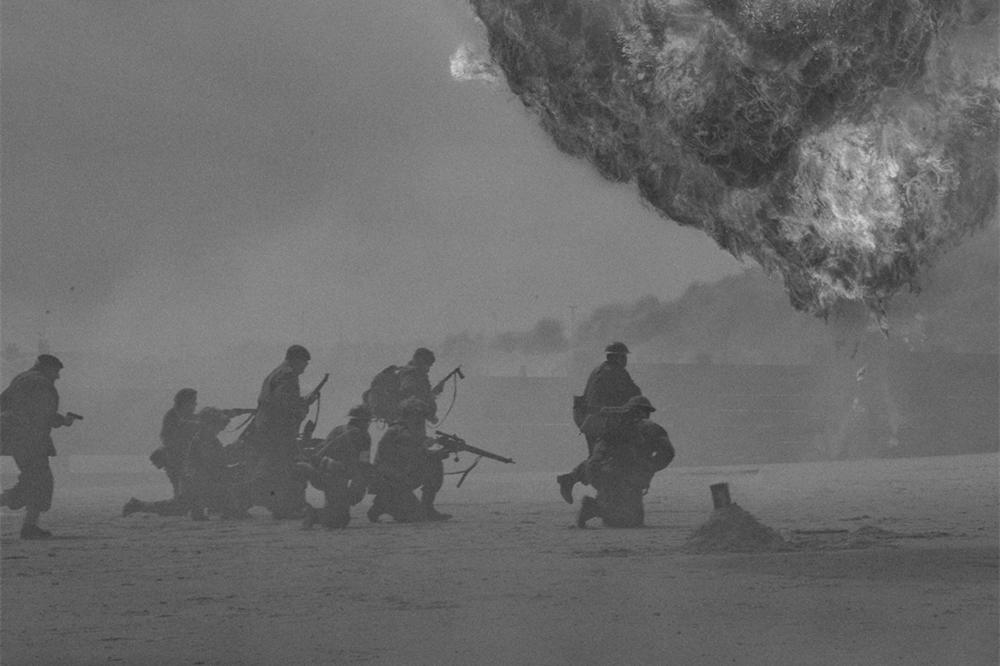
World War II was a global conflict fought from 1939 to 1945, but its roots reached back years before the first shots were fired in Europe. The war involved countries across Europe, Asia, Africa, the Pacific, and the Americas. It changed borders, destroyed cities, reshaped global power, and left deep human consequences that are still studied today.
This World War II timeline explains the war year by year, from Germany’s invasion of Poland to Japan’s formal surrender. It also highlights the major turning points, so the conflict is easier to understand as a connected story rather than a long list of dates.
World War II Key Facts
| Topic | Key Information |
|---|---|
| Dates | 1939 to 1945 |
| Common starting point | Germany’s invasion of Poland on September 1, 1939 |
| Main sides | Axis powers and Allied powers |
| Major Axis powers | Germany, Italy, and Japan |
| Major Allied powers | Britain, the Soviet Union, the United States, China, France, and others |
| Main theaters | Europe, North Africa, Asia, and the Pacific |
| End in Europe | Germany surrendered in May 1945 |
| End in the Pacific | Japan formally surrendered on September 2, 1945 |
World War II Timeline Summary by Year
| Year | Major Events | Why It Mattered |
|---|---|---|
| 1939 | Germany invades Poland; Britain and France declare war | World War II begins in Europe |
| 1940 | Germany conquers much of western Europe; France falls; Battle of Britain | Britain survives and prevents a quick German victory in the west |
| 1941 | Germany invades the Soviet Union; Japan attacks Pearl Harbor; the United States enters the war | The war becomes fully global |
| 1942 | Midway, El Alamein, Stalingrad, and the intensification of the Holocaust | Axis expansion begins to slow |
| 1943 | Germany surrenders at Stalingrad; Allies win in North Africa and invade Italy | The Allies gain momentum in Europe and the Mediterranean |
| 1944 | D-Day, liberation of Paris, Soviet advances, Battle of the Bulge | Germany is pressured from both east and west |
| 1945 | Germany surrenders; Iwo Jima and Okinawa show the cost of the Pacific War; atomic bombs are dropped; Japan surrenders | World War II ends and the postwar world begins |
The Road to World War II: Background Before 1939
World War II did not begin suddenly. The causes developed through political anger, economic crisis, aggressive nationalism, and the failure of world leaders to stop expansionist powers early.
The Treaty of Versailles and Unresolved Tensions
After World War I ended in 1918, the Treaty of Versailles placed heavy penalties on Germany. Germany lost territory, had its military restricted, and was forced to accept responsibility for the war. Many Germans saw the treaty as humiliating.
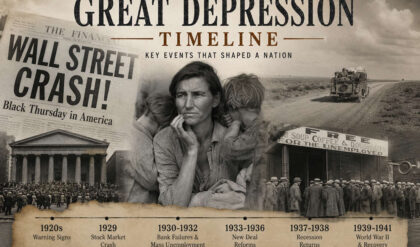
During the 1920s and 1930s, Adolf Hitler and the Nazi Party used this resentment to gain support. The Great Depression made the situation worse by creating mass unemployment, fear, and political instability. Hitler promised national revival, military strength, and revenge against the post-World War I settlement.
The Rise of Fascism and Militarism
In Europe, fascist governments rose in Italy and Germany. Fascism promoted dictatorship, extreme nationalism, military power, and obedience to the state. Benito Mussolini took power in Italy in the 1920s, while Hitler became chancellor of Germany in 1933 and soon turned the country into a Nazi dictatorship.
In Asia, Japan’s military gained increasing influence over the government. Japanese leaders wanted access to land, resources, and markets. This expansionist goal led Japan to invade Manchuria in 1931 and expand the war in China in 1937.
Appeasement and the Failure to Stop Aggression
During the 1930s, Germany rebuilt its military, remilitarized the Rhineland, annexed Austria, and demanded territory from Czechoslovakia. Britain and France followed a policy known as appeasement, hoping that giving in to some of Hitler’s demands would prevent another major war.
The Munich Agreement of 1938 allowed Germany to take the Sudetenland from Czechoslovakia. Instead of satisfying Hitler, it encouraged further aggression. In March 1939, Germany occupied the rest of Czech territory. By then, it was becoming clear that Hitler’s goals went far beyond revising the Treaty of Versailles.
1939: World War II Begins in Europe
Germany Invades Poland
The World War II timeline in Europe usually begins on September 1, 1939, when Germany invaded Poland. Germany used a fast-moving style of warfare often called blitzkrieg, or “lightning war.” This strategy combined aircraft, tanks, and infantry to break through enemy defenses quickly.
Poland was attacked from the west by Germany and later from the east by the Soviet Union. The invasion overwhelmed Polish defenses, and the country was divided between the two powers.
Britain and France Declare War
On September 3, 1939, Britain and France declared war on Germany. They had promised to defend Poland, but they were not able to save it from occupation. Still, their declarations turned Germany’s invasion into a wider European war.
At first, western Europe experienced a strange pause known as the “Phoney War.” Britain and France were officially at war with Germany, but large-scale fighting in the west did not begin immediately.
The Nazi-Soviet Pact
Before invading Poland, Germany and the Soviet Union had signed the Nazi-Soviet Pact. Publicly, it was a nonaggression agreement. Secretly, it included plans to divide parts of eastern Europe between them.
The pact gave Hitler confidence that Germany could invade Poland without immediately fighting the Soviet Union. It also gave Joseph Stalin time to strengthen the Soviet position before a possible future conflict.
1940: Axis Victories and Britain Stands Alone
Germany Invades Denmark and Norway
In April 1940, Germany invaded Denmark and Norway. These invasions helped Germany secure access to northern waters and important supply routes. Denmark fell quickly, while Norway was occupied after a longer campaign.
Control of Norway gave Germany stronger naval and air positions in the North Atlantic. This mattered because Britain depended on overseas shipping for food, fuel, and military supplies.
The Fall of France
In May 1940, Germany attacked western Europe. German forces invaded Belgium, the Netherlands, Luxembourg, and France. France had prepared for a defensive war, but Germany moved through the Ardennes region and broke through Allied lines.
British and Allied troops were forced to evacuate from Dunkirk. Although many soldiers were rescued, they left behind heavy equipment. France surrendered in June 1940. Germany occupied northern and western France, while a collaborationist government based in Vichy controlled part of the south.
The Battle of Britain
After France fell, Britain stood as Germany’s main enemy in western Europe. Hitler hoped to force Britain to surrender or prepare for invasion. The German air force, the Luftwaffe, attacked British airfields, cities, ports, and defenses.
The Battle of Britain became a major turning point because Britain did not surrender. The Royal Air Force resisted Germany’s air campaign, preventing Germany from gaining control of the skies and making a direct invasion of Britain impossible at that time.
Italy Enters the War
Italy entered the war on Germany’s side in June 1940. Mussolini hoped to expand Italian power in the Mediterranean, North Africa, and the Balkans. Italy’s entry widened the war and created new fronts, but Italian forces often depended on German support in later campaigns.
1941: The War Becomes Global
Operation Barbarossa: Germany Invades the Soviet Union
On June 22, 1941, Germany launched Operation Barbarossa, the invasion of the Soviet Union. This opened the largest land front of World War II. Millions of soldiers fought across huge distances, and the war in the east became especially brutal.
At first, German forces advanced rapidly. They captured large areas and inflicted massive losses. But the Soviet Union did not collapse. As the campaign continued, German forces faced supply problems, fierce resistance, and the harsh Russian winter.
The Atlantic Charter and Allied Cooperation
Before the United States formally entered the war, President Franklin D. Roosevelt and British Prime Minister Winston Churchill issued the Atlantic Charter in August 1941. It described broad goals for the postwar world, including self-determination, economic cooperation, and collective security.
The charter showed that the United States and Britain were already working closely together. It also helped define the Allied cause as more than military survival.
Pearl Harbor and the United States Enters the War
On December 7, 1941, Japan attacked the U.S. naval base at Pearl Harbor in Hawaii. The Pearl Harbor attack killed more than 2,400 Americans and damaged or destroyed many ships and aircraft.
The next day, the United States declared war on Japan. On December 11, Germany and Italy declared war on the United States. This connected the wars in Europe and Asia into one global conflict.
1942: Major Turning Points Begin
The Battle of Midway
In June 1942, the United States defeated Japan at the Battle of Midway. The battle was fought mostly by aircraft launched from carriers. Japan lost several aircraft carriers and many experienced pilots.
Midway did not end the Pacific War, but it stopped Japan’s expansion across the central Pacific. After Midway, the United States and its Allies gradually moved from defense to offense.
The Holocaust Intensifies
During the war, Nazi persecution of Jews and other targeted groups became increasingly radical. As Germany occupied more of Europe, Nazi leaders expanded ghettos, deportations, mass shootings, forced labor, concentration camps, killing centers, and sites of mass murder.
The Holocaust and World War II were closely connected because Nazi racial policy became more extreme as German armies invaded and occupied more territory. The Holocaust was the systematic murder of six million Jews, along with the persecution and murder of many others, including Roma people, disabled people, Polish civilians, Soviet prisoners of war, and political opponents.
The Battle of El Alamein
In North Africa, British and Allied forces fought Axis armies for control of Egypt, Libya, and nearby supply routes. In late 1942, the British victory at El Alamein stopped Axis advances toward Egypt and the Suez Canal.
This mattered because control of the Mediterranean and Middle Eastern routes could affect oil supplies, shipping, and the connection between Europe, Africa, and Asia.
The Battle of Stalingrad Begins
In 1942, German forces pushed deep into the Soviet Union and reached Stalingrad. The city became the site of one of the most important and destructive battles of the war.
Stalingrad was important for both military and symbolic reasons. German leaders wanted to control the city and cut Soviet transport routes along the Volga River. Soviet leaders were determined to hold it.
1943: The Allies Gain Momentum
Germany Surrenders at Stalingrad
In February 1943, German forces at Stalingrad surrendered. The defeat was a major turning point on the Eastern Front. Germany lost a large army and never fully regained the initiative in the east.
After Stalingrad, the Soviet Union began pushing German forces westward. The Eastern Front remained deadly and difficult, but the direction of the war had changed.
Allied Victory in North Africa
In 1943, Axis forces in North Africa surrendered. This gave the Allies control of the region and helped secure Mediterranean routes. It also gave Allied forces a base for attacking southern Europe.
The Invasion of Sicily and Italy
In July 1943, Allied forces invaded Sicily. The campaign helped bring down Mussolini’s government. Italy later surrendered to the Allies, but Germany occupied much of the country and continued fighting there.
The Italian campaign was slow and costly. Mountainous terrain, strong German defenses, and difficult weather made progress hard. Still, the campaign forced Germany to use troops and resources away from other fronts.
The Pacific Island-Hopping Campaign
In the Pacific, the Allies used a strategy often called island-hopping. Instead of attacking every Japanese-held island, Allied forces captured selected islands that could be used as bases for aircraft, ships, and supplies.
This strategy slowly moved Allied forces closer to Japan. It also involved fierce battles on islands such as Guadalcanal, Tarawa, Saipan, Iwo Jima, and Okinawa.
1944: D-Day and the Liberation of Western Europe
D-Day: The Normandy Invasion
On June 6, 1944, Allied forces landed on the beaches of Normandy in northern France. The D-Day landings were part of Operation Overlord and began the campaign to liberate northwestern Europe from German occupation.
D-Day forced Germany to defend a major western front while Soviet forces advanced from the east. This divided German resources and made it much harder for Nazi Germany to recover.
The Liberation of Paris
In August 1944, Paris was liberated from German occupation. The liberation was a powerful symbol of Germany’s weakening control over western Europe. It also boosted Allied morale and showed that the German army was being pushed back.
The Soviet Advance in Eastern Europe
At the same time, Soviet forces advanced across eastern Europe. They pushed German troops out of much of Soviet territory and moved into Poland, Romania, Bulgaria, Hungary, and other areas.
This advance helped defeat Nazi Germany, but it also shaped the political future of eastern Europe. After the war, many of these countries came under Soviet influence, helping create the Cold War division of Europe.
The Battle of the Bulge
In December 1944, Germany launched a final major offensive in the west through the Ardennes Forest. This became known as the Battle of the Bulge because the German attack created a bulge in the Allied lines.
The offensive surprised the Allies, but it failed. German forces used up men, fuel, and equipment they could not replace. After the battle, Allied armies continued advancing toward Germany.
1945: The End of World War II
The Liberation of Concentration Camps
As Allied forces advanced into German-controlled territory, they liberated concentration camps, killing centers, and sites of mass murder. Soldiers, journalists, and survivors revealed evidence of Nazi crimes to the wider world.
The liberation of camps did not end the suffering of survivors immediately. Many were sick, starving, displaced, or without surviving family members. The discoveries became central to postwar justice, Holocaust memory, and human rights discussions.
Germany Surrenders
In April 1945, Soviet forces entered Berlin. Hitler died by suicide on April 30. Germany surrendered unconditionally in May 1945. Victory in Europe Day, or V-E Day, is usually marked on May 8, though the Soviet Union marked victory on May 9 because of the time difference.
The war in Europe was over, but the war in the Pacific continued.
Iwo Jima, Okinawa, and the Cost of the Pacific War
In 1945, the battles of Iwo Jima and Okinawa showed how difficult the final stage of the Pacific War had become. Both battles were extremely costly. Allied forces moved closer to Japan, but they faced fierce resistance and heavy casualties.
These battles help explain why the final months of the war were so intense. Military leaders expected that an invasion of Japan could be even more destructive, while Japanese civilians and soldiers were already facing bombing, shortages, and the collapse of the empire’s defenses.
The Atomic Bombings of Hiroshima and Nagasaki
On August 6, 1945, the United States dropped an atomic bomb on Hiroshima. On August 9, it dropped a second atomic bomb on Nagasaki. The bombings caused massive destruction and loss of life.
Japan announced its surrender on August 15, 1945. The formal surrender documents were signed on September 2, 1945, aboard the USS Missouri. This officially ended World War II.
The atomic bombings remain one of the most debated subjects in modern history. Some historians argue they shortened the war and avoided a costly invasion of Japan. Others emphasize the enormous civilian suffering and the beginning of the nuclear age.
Key Turning Points of World War II
The Battle of Britain
The Battle of Britain kept Britain in the war and denied Germany the air superiority needed for invasion. This preserved an Allied base in western Europe and kept pressure on Germany after France fell.
The Battle of Midway
Midway changed the balance of naval power in the Pacific. Japan’s carrier losses weakened its ability to expand, while the United States gained a stronger position for future offensives.
The Battle of Stalingrad
Stalingrad broke Germany’s momentum on the Eastern Front. After the surrender there, Germany increasingly fought a defensive war against the Soviet Union.
D-Day
D-Day opened a western route into Nazi-occupied Europe. Combined with the Soviet advance from the east, it forced Germany into a military situation it could not sustain.
Germany’s Defeat and Japan’s Surrender
Germany’s surrender ended the war in Europe. Japan’s surrender ended the Pacific War and brought the global conflict to a close. Together, these events marked the end of the deadliest war in modern history.
How World War II Changed the World
The United Nations and a New Global Order
After World War II, world leaders created the United Nations to encourage international cooperation and prevent future global wars. The war also left the United States and the Soviet Union as the two strongest powers in the world.
The Beginning of the Cold War
The wartime alliance between the United States and the Soviet Union did not last. After Germany’s defeat, disagreements over eastern Europe, political systems, and global influence helped begin the Cold War.
Decolonization and Changing Empires
World War II weakened many European empires. Britain, France, the Netherlands, and other colonial powers faced growing independence movements after the war. In Asia, Africa, and the Middle East, many people demanded self-rule and an end to imperial control.
Memory, Justice, and Human Rights
The war also changed how the world thought about justice and human rights. The Nuremberg Trials prosecuted major Nazi leaders for war crimes and crimes against humanity. The Holocaust became central to global discussions about genocide, racism, antisemitism, and the responsibility to remember victims.
Conclusion
A World War II timeline is more than a list of battles and dates. It shows how political decisions, military campaigns, civilian suffering, genocide, technology, and diplomacy became connected across the world.
From Germany’s invasion of Poland in 1939 to Japan’s surrender in 1945, the war reshaped the modern world. It ended Nazi rule in Germany and Japanese expansion in Asia, but it also left destroyed cities, displaced people, new global tensions, and lasting moral questions. Understanding the timeline helps explain not only how World War II unfolded, but why its effects are still important today.