
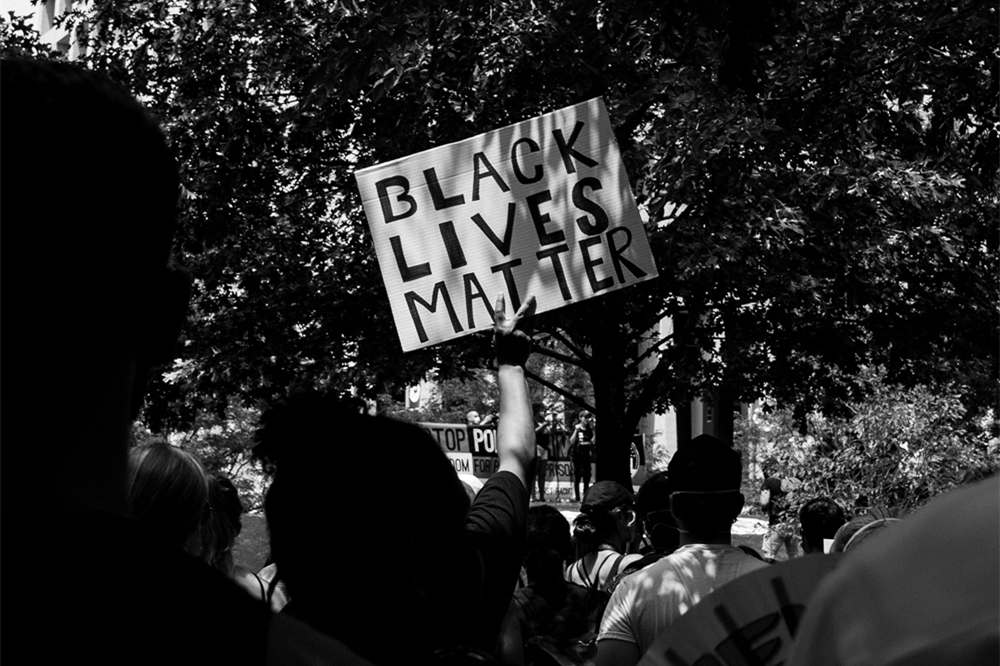
The largest protest movement in U.S. history is generally considered to be the 2020 Black Lives Matter protests that followed the murder of George Floyd in Minneapolis. Estimates suggest that about 15 million to 26 million people in the United States participated in demonstrations connected to the movement. That makes it larger than any other sustained protest movement in American history.
There is one important distinction to understand. The 2020 Black Lives Matter protests were the largest protest movement over time, while the first Earth Day in 1970 is often identified as the largest single-day protest event in U.S. history. The 2017 Women’s March was also one of the largest single-day protest marches in modern American history. Together, these events show how mass protest has shaped U.S. history in different ways.
Largest Protest in U.S. History: Key Facts
- Largest protest movement: The 2020 Black Lives Matter protests after George Floyd’s murder.
- Estimated participation: About 15 million to 26 million people in the United States.
- Largest single-day protest event: The first Earth Day on April 22, 1970, with about 20 million participants.
- Major modern single-day protest march: The 2017 Women’s March, with U.S. turnout estimates as high as 5.3 million.
- Earlier landmark protest: The 1963 March on Washington, with about 250,000 participants.
- Why it matters: These protests show how Americans have used public demonstrations to demand racial justice, environmental protection, civil rights, gender equality, and political change.
The Largest Protest Movement: Black Lives Matter in 2020
The 2020 Black Lives Matter protests began after George Floyd was murdered by Minneapolis police officer Derek Chauvin on May 25, 2020. Video of the killing spread widely, and public anger quickly turned into demonstrations across the country.
At first, protests began in Minneapolis. Within days, they had spread to major cities, suburbs, small towns, college communities, and state capitals. Demonstrations took place in places with long histories of racial justice activism, but they also appeared in communities where large protests were less common. This wide geographic reach is one reason the 2020 protests stand out in American history.
The protests were closely tied to the Black Lives Matter movement, which began in 2013 after George Zimmerman was acquitted in the fatal shooting of Trayvon Martin. The phrase “Black Lives Matter” became a rallying cry against police violence and racial injustice. By 2020, the movement already had years of organizing history behind it, but George Floyd’s murder brought it into an even larger national and international spotlight.
According to the Harvard Kennedy School, research connected to Erica Chenoweth and protest-counting projects estimated that 15 million to 26 million people in the United States participated in George Floyd protests. That estimate is the main reason the 2020 Black Lives Matter protests are widely described as the largest protest movement in U.S. history.
How Large Were the 2020 Protests?
Counting protests is difficult. A single march in one city can be hard to measure, and the 2020 protests were not one march in one place. They were a wave of demonstrations across thousands of communities over many weeks.
That is why the commonly cited estimate is a range rather than a single exact number. Even the lower end of the estimate, about 15 million participants, would make the movement enormous by American historical standards. The upper estimate, about 26 million, shows how unusually widespread the protests became.
The Crowd Counting Consortium, a project connected to Harvard Kennedy School and the University of Connecticut, collects publicly available data about rallies, marches, demonstrations, and civil disobedience events in the United States. Projects like this help researchers study protest activity more carefully, but they also show why exact numbers are hard to prove. Protest size depends on local reports, photographs, organizer estimates, police estimates, media accounts, and the length of time being studied.
Still, the broad conclusion is clear: the 2020 Black Lives Matter protests were not only large in a few major cities. They were a national protest wave, and their total participation made them the largest protest movement in U.S. history.
Why Did the Protests Spread So Quickly?
The protests spread quickly for several reasons. The first was the public reaction to the video of George Floyd’s death. Many Americans saw it as evidence of police violence and racial injustice. For people who had already followed earlier cases involving Black Americans killed by police or while in custody, Floyd’s death felt like part of a longer pattern.
The second reason was the history of Black Lives Matter organizing. The movement did not begin in 2020. It had already shaped public discussion after the deaths of Trayvon Martin, Michael Brown, Eric Garner, Breonna Taylor, and others. By the time protests began after Floyd’s death, many activists, local groups, and supporters already understood the language, networks, and goals of the movement.
Social media also played a major role. Videos, protest information, donation links, legal aid resources, and personal statements spread quickly across platforms. This helped demonstrations form rapidly in many different communities.
The timing mattered too. The protests happened during the COVID-19 pandemic, when much of American life had already been disrupted. Many people were spending more time online, watching national events closely, and thinking about inequality in health care, work, housing, and public safety. The pandemic did not cause the protests, but it shaped the moment in which they happened.
What Were Protesters Demanding?
The 2020 protests included many people and many local groups, so there was not one single list of demands shared by every protester. However, several common themes appeared across the movement.
Many protesters demanded accountability for police violence. This included calls for investigations, criminal charges in specific cases, changes to police discipline, and greater public transparency. Protesters also called attention to the names of Black people who had died during encounters with police or while in custody.
Another major demand was criminal justice reform. For some people, that meant changing police training, use-of-force rules, and oversight systems. For others, it meant reducing the role of police in responding to problems such as mental health crises, homelessness, or school discipline.
Some activists used the phrase “defund the police,” though people used that phrase in different ways. In general, it referred to shifting some public money away from policing and toward social services, housing, education, and community programs. Supporters and critics often disagreed over what that policy should look like in practice.
The protests also raised broader questions about racial inequality in the United States. They pushed public discussion beyond policing alone and into topics such as voting rights, education, health care, housing, employment, monuments, and how American history is taught.
The Largest Single-Day Protest: Earth Day 1970 and the Women’s March
The largest single-day protest event in U.S. history was the first Earth Day, held on April 22, 1970. According to the U.S. Environmental Protection Agency, about 20 million Americans demonstrated in different cities as part of Earth Day. The event included rallies, teach-ins, speeches, student actions, and community demonstrations focused on environmental protection.
Earth Day was not a single march in one city. It was a nationwide day of civic action. That is why it is sometimes discussed differently from protest marches such as the Women’s March or the March on Washington. Still, by participation, Earth Day 1970 is a leading answer for the largest single-day protest in American history.
The 2017 Women’s March is another major comparison. It took place on January 21, 2017, the day after Donald Trump’s first inauguration. The main march was in Washington, D.C., but sister marches took place across the United States and around the world. Britannica lists U.S. turnout estimates as high as 5.3 million, making it one of the largest single-day protest marches in U.S. history.
For students, the simplest way to remember the difference is this: the 2020 Black Lives Matter protests were the largest sustained protest movement, the first Earth Day in 1970 was the largest single-day protest event by participation, and the 2017 Women’s March was one of the largest single-day protest marches in modern U.S. history.
How the 2020 BLM Protests Compare With Other Major Protests
Mass protests can be compared by turnout, length, location, goals, and historical impact. The following table gives a simple overview of several major protest moments in U.S. history.
| Protest or Movement | Year | Estimated Scale | Main Focus | Why It Matters |
|---|---|---|---|---|
| Black Lives Matter / George Floyd protests | 2020 | About 15 million to 26 million participants over time | Police violence and racial justice | Generally considered the largest protest movement in U.S. history |
| First Earth Day | 1970 | About 20 million participants in one day | Environmental protection | Helped move environmental issues into national politics |
| Women’s March | 2017 | Up to about 5.3 million participants in the U.S. | Women’s rights, equality, civil rights, and political protest | One of the largest single-day protest marches in U.S. history |
| March on Washington for Jobs and Freedom | 1963 | About 250,000 participants | Civil rights, jobs, and racial equality | One of the most influential civil rights demonstrations in American history |
This comparison shows why size and significance are not always the same thing. The March on Washington was much smaller than the 2020 Black Lives Matter protests in raw numbers, but it had enormous influence on the civil rights movement and the national debate over racial equality.
Earlier Major Protests in U.S. History
The United States has a long history of protest. From the colonial period to the present, Americans have used demonstrations, marches, boycotts, strikes, petitions, and public meetings to demand change.
One of the most famous examples is the March on Washington for Jobs and Freedom, held on August 28, 1963. About 250,000 people gathered in Washington, D.C., to call for civil rights legislation, voting rights, fair employment, and an end to racial discrimination. The march is especially remembered for Martin Luther King Jr.’s “I Have a Dream” speech, but it was also the result of careful organizing by civil rights, labor, and religious leaders.
During the Vietnam War era, antiwar protests became another major part of American public life. Students, veterans, religious groups, civil rights activists, and ordinary citizens protested U.S. involvement in Vietnam. These protests did not all happen in one single event. Instead, they formed a long-running movement that shaped politics, campuses, journalism, and public trust in government.
Labor protests also played a major role in U.S. history. Workers organized strikes and marches to demand safer workplaces, shorter hours, higher wages, and the right to form unions. Some labor protests were met with violence, but they helped shape later workplace protections and labor laws.
Immigration rights marches, LGBTQ+ rights demonstrations, women’s rights protests, Indigenous rights actions, and antiwar movements have also shaped the country. These events remind us that protest is not unusual in American history. It is one of the ways people have tried to influence public policy and public opinion.
What Made the 2020 Protests Historically Important?
The 2020 Black Lives Matter protests were historically important because of their scale, speed, and reach. Millions of people participated, and demonstrations appeared in many different kinds of communities. That national spread made the movement different from protests centered mainly in one city or region.
The protests also showed how modern protest works. Street demonstrations were combined with phone videos, social media posts, online organizing, livestreams, donation campaigns, local mutual aid, and national news coverage. This mix helped the movement grow quickly and made it visible to people who were not physically present at a protest.
Another important feature was the movement’s international reach. Protests connected to George Floyd and Black Lives Matter appeared in countries around the world. In some places, protesters focused on U.S. racism and police violence. In others, they connected Floyd’s death to local histories of racism, colonialism, migration, and policing.
The protests also affected how Americans talked about history and public memory. Across the country, people debated statues, public names, and monuments connected to slavery, the Confederacy, colonialism, and racial violence. These debates showed how a protest movement can challenge both present-day policies and older ways of remembering the past.
The Legacy of the Largest Protest Movement in U.S. History
The legacy of the 2020 Black Lives Matter protests is still being studied. Some effects were immediate. Charges were brought against Derek Chauvin and other officers involved in George Floyd’s death. Cities and states debated police reform. Companies, schools, museums, universities, and public agencies reviewed public statements, policies, or internal practices.
Other effects were more complicated. Some communities changed police policies or discussed new approaches to public safety. Other proposals stalled, changed, or faced public resistance. The phrase “defund the police” became one of the most debated slogans of the period, with different groups using and interpreting it in different ways.
The movement also produced backlash. Some people supported the broad call for racial justice but disagreed over specific tactics or policy ideas. Others strongly opposed the protests or argued that public safety should be the main priority. These disagreements became part of wider political debates in the years that followed.
For students of U.S. history, that complexity is important. Protest movements rarely produce simple results. They can change public language, pressure leaders, inspire local reforms, create new organizations, and open debates that continue for years. Some goals are achieved, some are blocked, and some are reshaped over time.
The 2020 protests will likely remain an important subject for historians because they brought together several major themes in modern American life: race, policing, technology, public health, political division, local activism, and national memory.